Rechercher dans ce blog

Showing posts with label spinach. Show all posts

Friday, November 13, 2020

Spinach with chilli, garlic and ginger recipe - Telegraph.co.uk

teke.indah.link

This works brilliantly alongside this dish of Mughlai chicken with almonds and sultanas. Because of the richness of the chicken you only need a simple ‘dry’ vegetable on the side.

Prep time: 5 minutes | Cooking time: 10 minutes

SERVES

6-8 as a side

INGREDIENTS

  • 650g baby spinach leaves
  • 3 garlic cloves, finely sliced
  • ¾ tsp chilli flakes
  • 1 tbsp sunflower oil or ghee
  • 20g root ginger, peeled and finely grated

METHOD

  1. Set a large sauté pan or casserole over a medium heat. Add the spinach leaves and cook, turning them over, for about 2 minutes. Leave to cool then squeeze the excess water out. Set aside.
  2. Put the garlic and chilli in the pan with cold ghee or oil. Season and cook over a very gentle heat for 5-7 minutes, stirring from time to time. The garlic should become translucent.
  3. Add the ginger and cook for another 2 minutes. Turn the heat up to medium, add the spinach leaves and reheat, stirring all the time.  Season and serve immediately.


November 13, 2020 at 03:33PM
https://ift.tt/2Izxy7Y

Spinach with chilli, garlic and ginger recipe - Telegraph.co.uk

https://ift.tt/3dlpAsO
spinach

Kale vs. Spinach: Which Is Heart-Healthier? - Health Essentials from Cleveland Clinic

teke.indah.link

It’s the battle of the greens and the ultimate faceoff is spinach versus kale. Health aficionados can’t get enough of kale and its signature dark green color, but where does it stack up against its opponent spinach?  

Cleveland Clinic is a non-profit academic medical center. Advertising on our site helps support our mission. We do not endorse non-Cleveland Clinic products or services. Policy

Kale and spinach — both “super veggies” — are packed with nutrients because they’re leafy greens, says preventive cardiology​ dietitian Kate Patton, MEd, RD, CSSD, LD. 

From nutrients to health benefits, she helps unfold everything you need to know about this powerful duo and tips for working these leafy greens into your diet.

Which is heart-healthier? 

Kale and spinach are both super veggies loaded with nutrients, but which leafy green should rule when it comes to heart health? 

The truth is that both spinach and kale are heart-healthy and are great choices.

“Leafy greens are so good for you that you really can’t eat too many,” says Patton. “In fact, they’re considered heart-healthy superfoods.”

Spinach is not only great for your heart, but it helps boosts eye health, helps reduce blood pressure levels and it helps prevent cancer. Not only that, but it boasts more fiber, protein and vitamin A than kale and is also higher in calcium and iron. 

On the other hand, kale crushes spinach when it comes to vitamins K and C, plus it’s also lower in calories and richer in heart-healthy flavonoids. These flavonoids are packed with anti-inflammatory and anti-carcinogenic properties. 

“Truly, you can’t go wrong with either choice,” she says. “As a bonus, both contain omega-3 fatty acids. This helps fight the inflammation at the root of heart disease and other chronic illnesses.”

What’s the best way to prepare kale and spinach? 

Kale’s pungent, slightly bitter, peppery taste stands on its own very well — steamed, sauteed or baked into yummy kale chips. If you find kale’s taste a bit strong, look for blends of kale with other greens or try milder baby kale. Don’t forget to remove the tough middle part so you don’t get a bitter taste in your mouth after chewing on it. 

While cruising through your local produce aisle, look for dark green leaves that are free of brown or wilted leaves. The firmer it is, the better. 

When it comes to spinach, there’s a variety of ways you can prepare (or drink!) it. Spinach can be tossed fresh in a salad, layered in a wrap or sandwich, or added to just about any dish. Its fairly mild flavor complements eggs, pasta, rice and beans. Add spinach to soups or chop it and mix into burgers and sauces. Plus, try throwing it into your favorite smoothie for added benefits. Don’t worry, you won’t be able to taste it. 

“All leafy greens are packed with vitamins, minerals and other nutrients, so don’t limit yourself to spinach and kale,” says Patton. “Think about adding collard greens, mustard greens, Swiss chard and turnip greens to salads and soups, or prepare them as a tasty side.”


November 13, 2020 at 09:40AM
https://ift.tt/3ptlHcW

Kale vs. Spinach: Which Is Heart-Healthier? - Health Essentials from Cleveland Clinic

https://ift.tt/3dlpAsO
spinach

Thursday, November 12, 2020

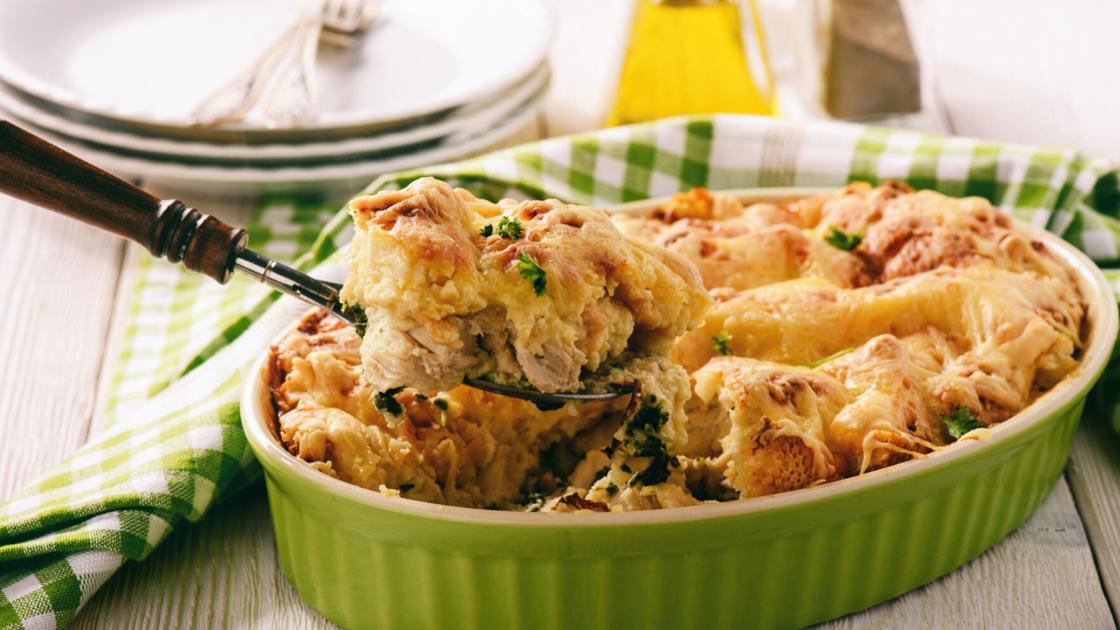
Change in weather calls for a chicken and spinach strata - Arizona Daily Star

teke.indah.link

There are many ways to put eggs to work in the kitchen, including frittatas and stratas.

Years ago, someone gave me a mug that has become my favorite. It features a replica of a torn-out newspaper story and the headline says: “Woman solves world’s oldest question: What’s for dinner?” It makes me smile every morning.

My friend Olivia really has the best answer for that. She has developed a weekly rotation that solves the dinner dilemma yet still leaves room for a lot of culinary creativity.

Olivia loves to cook, and a lot of our conversations revolve around food. But here’s the hitch: She’s a vegetarian and has been for years; her husband is not, and neither are the varied friends and relatives who make appearances at her table. She doesn’t mind cooking meat dishes for them in the least; but she also makes a big salad every night so she always has at least one thing to eat.

I asked her to summarize her rotation. It looks like this, with her remarks:

Sunday: “I’ll roast something — a chicken, a pot roast, a pork roast — and make pizza dough, then refrigerate it for later.”

Monday: “If it’s cold, I make some kind of chili. If it’s hot, we just grill something.”

Tuesday: Tacos — “I might use some of Sunday’s leftovers here, or not.”

Wednesday: Pasta — “I might use some of Sunday’s leftovers here, too, or not.”

Thursday: Pizza — “The dough I made on Sunday has ripened and is ready to go.”

Friday: Eggs, “because we have chickens, so Friday has always been egg night.”

Saturday: Wild card — “This is when I can make anything I feel like making.” That might be a new recipe, or a dish that involves something she picked up on special at the grocery store, she says.

I am not as organized as Olivia is, but I’m thinking my life would easier if I were. I would make a few modifications to suit my own cooking practices, though. Monday night would probably turn into “soup or stew,” for example, and I’d turn Taco Tuesday into Burrito or Quesadilla Tuesday. Pizza Thursday might expand to “flatbread Thursday” so I could include something to go with homemade tortillas or pitas that night.

Just mentally organizing your dinner rotation this way makes shopping easier, faster, and, I suspect, more budget-friendly — because you’ll reduce food waste and spend less on specialty ingredients you don’t really use but needed for that one recipe you wanted to try.

I especially love Friday — egg day — because there are so many marvelous ways to put eggs to work in the kitchen. I love a good sunny-side up fried egg, butter-basted as my mother used to do, and omelets are always an easy solution, whether they’re French, Japanese or souffle. But with the change of weather, I’ve been turning more to frittatas and stratas, like the chicken and spinach one I made last week.

Give it a try, won’t you?

CHICKEN AND SPINACH STRATA

Makes about 6 servings

The key part to this recipe is to let the composed strata sit for at least an hour before baking. If you think you’d like to make it in the morning but worry about time in the a.m. crunch, cube the bread, squeeze the spinach dry, and whisk the egg-milk-seasoning mixture together the night before. Then assembly takes just minutes. Change the proteins (cooked ones only), the veg and the cheese to vary the strata.

INGREDIENTS

1 tablespoon butter

6 large eggs

1 teaspoon coarse salt

1 teaspoon freshly ground black pepper

1 pinch cayenne pepper

1 pinch freshly grated nutmeg

1¼ cups whole milk, half-and-half or heavy cream

8 ounces day-old or stale bread, cubed (about 2 cups)

2 cups diced cooked chicken or other leftover cooked protein

1 pound fresh spinach, wilted, squeezed dry, or a 10-ounce box of frozen spinach thawed and squeezed dry

2 cups shredded cheese, divided (I like pepper jack)

PREPARATION

Grease bottom and sides of an 8-by-8-inch baking dish with the butter.

Place bread cubes in a large mixing bowl.

Crack eggs into a separate mixing bowl. Season with salt, pepper, cayenne and nutmeg. Add cream and whisk mixture thoroughly.

Pour egg/cream mixture over the bread cubes and mix to distribute ingredients evenly. Allow bread mixture to sit about 15 minutes to absorb the liquid.

Transfer half of the bread mixture to the baking pan; spread evenly over the bottom and press mixture down a bit. Top with half of the grated cheddar cheese. Add cooked bacon pieces in an even layer over the cheese. Place the cooked spinach over the bacon; top with half of the remaining cheese. Finish with the rest of the soaked bread cubes, spread evenly and pressed down slightly. Sprinkle with the rest of the grated cheese. Cover and let strata sit at room temperature for one hour before baking, or cover and refrigerate overnight.

Preheat oven to 350 degrees. Bake strata until set, about 45 minutes.

Robin Mather is a longtime food journalist and the author of “The Feast Nearby.” Follow her blog as she writes her third book, “The Feast of the Dove,” at thefeastofthedove.com.


November 12, 2020 at 09:31PM
https://ift.tt/3lp9NON

Change in weather calls for a chicken and spinach strata - Arizona Daily Star

https://ift.tt/3dlpAsO
spinach

Wednesday, November 11, 2020

Quick Fix: Savor these steak cubes glazed with garlicky sauce - Grand Island Independent

teke.indah.link
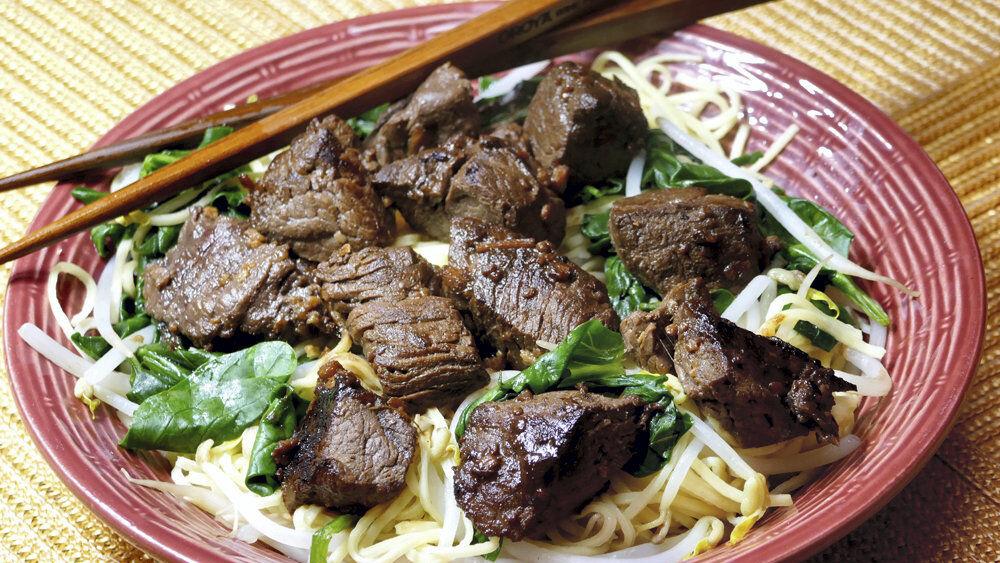
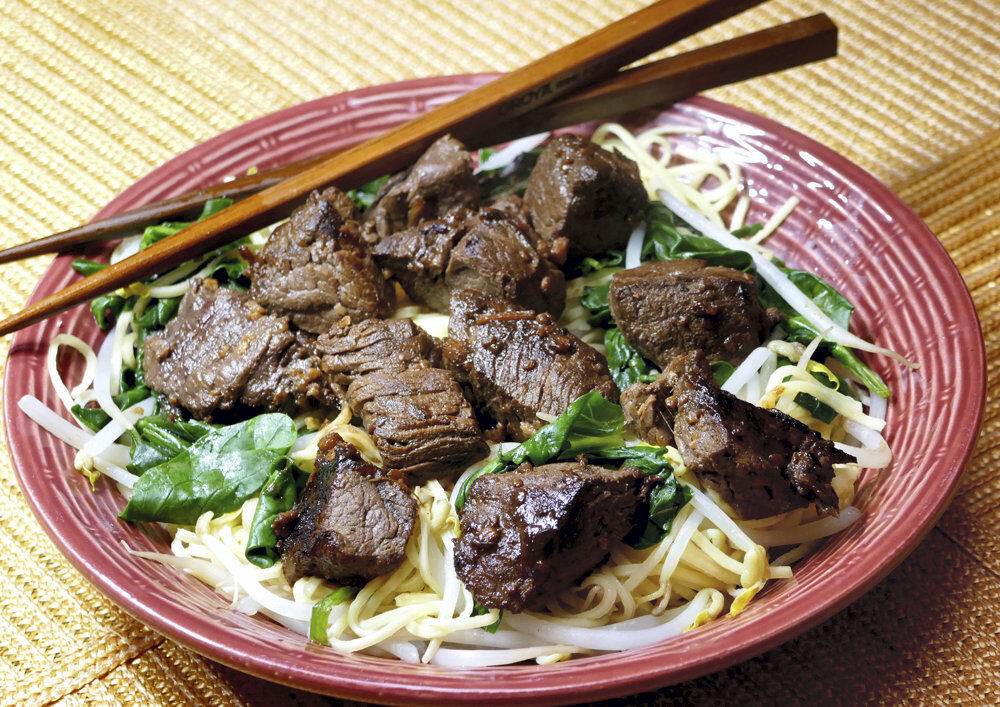
Korean Steak Bowl WEB

Korean Steak Bowl (Linda Gassenheimer/TNS)

Juicy steak bites top noodles and spinach for this quick and tasty bowl dinner. Steak plays an important role in Korean cooking. Here steak cubes are coated with a garlicky sauce glaze.

Noodles are another staple. There are many noodle shops throughout the country. This noodle side dish calls for spinach, but any green vegetable — broccoli, green beans or peas — can be used.

SHOPPING LIST: To buy: 3/4 pound beef tenderloin, 1 small bottle low-sodium soy sauce, 1 small bottle white vinegar, 1 jar minced garlic, 1 bottle Dijon mustard, 1 small piece fresh ginger or 1 bottle ground ginger, 1 bottle sesame oil, 1/4 pound steamed Chinese, 1 package bean sprouts and 1 package washed, ready-to-eat spinach. Staples: salt and freshly ground black pepper.

Korean Steak Bowl

For steak bites:

  • 3/4 pound beef tenderloin (see note)
  • 1/4 cup low-sodium soy sauce
  • 1/4 cup white vinegar
  • 2 teaspoons minced garlic (see note)
  • 2 teaspoons Dijon mustard
  • 1 tablespoon chopped fresh ginger or 2 teaspoons ground ginger
  • Dash of freshly ground black pepper
  • 2 teaspoons sesame oil

Note: Any type of quick-cooking steak can be used (skirt, flank, strip). Four crushed garlic cloves can be used instead of bottled minced garlic.

Remove visible fat from steak and cut into 1-inch pieces. Place in a plastic bag. Add soy sauce, vinegar, garlic, mustard, ginger and black pepper. Seal the bag and gently shake to combine ingredients. Marinate 5 minutes turning bag over during that time.

Heat oil in a wok or skillet. Remove steak and sauté cubes 2 minutes turning them oven once. (An easy way to turn steak cubes over is with tongs or two spoons.)

Pour marinade into skillet and continue to sauté 3 minutes. The sauce will reduce and thicken slightly. A meat thermometer should read 130 degrees for medium rare. Place steak and sauce over noodles in the bowls.

Makes 2 servings.

Nutrition information per serving: 310 calories (44% from fat), 15.3 g fat (5.3 g saturated, 6 g monounsaturated), 84 mg cholesterol, 38.8 g protein, 4.7 g carbohydrates, 0.7 g fiber, 1,190 mg sodium.

Green Noodles

  • 1/4 pound steamed Chinese noodles (see note)
  • 1 cup fresh bean sprouts
  • 6 cups washed, ready-to-eat spinach
  • 2 teaspoons sesame oil
  • Salt and freshly ground black pepper

Note: Steamed or fresh Chinese noodles can be found in the produce department. Dried noodles or angel hair pasta can be used instead.

Bring a large saucepan half filled with water to a boil. Add the noodles and boil 2 minutes. Add bean sprouts and spinach and boil 1 minute. Drain and toss with the sesame oil and salt and pepper to taste. Divide between 2 dinner bowls.

Makes 2 servings.

Nutrition information per serving: 296 calories (23% from fat), 7.5 g fat (1.4 g saturated, 2.5 g monounsaturated), 48 mg cholesterol, 12.2 g protein, 47 g carbohydrates, 5 g fiber, 87 mg sodium.

Quick Fix is a Tribune News Service column from Linda Gassenheimer. She is the author of more than 300 cookbooks, most recently, of “The 12-Week Diabetes Cookbook.” Find her online at dinnerinminutes.com or on Facebook, or follow her on Twitter @lgassenheimer. Email: linda@dinnerinminutes.com.


November 11, 2020 at 06:15PM
https://ift.tt/3eMPk3M

Quick Fix: Savor these steak cubes glazed with garlicky sauce - Grand Island Independent

https://ift.tt/3dlpAsO
spinach

Recipe of the Week: Craving takeout? Here's how to make spinach paneer at home - Gwinnettdailypost.com

teke.indah.link

Homemade Indian curries can be as simple or complex as you like. It's easier than ever to find jars of Indian sauces that require little more than heating in a pan and serving with some kind of protein and rice.

On the other end of the spectrum, you make the curry totally from scratch, making homemade nut pastes and paneer and toasting and grinding spices for your own garam masala.

"MOB Veggie" author Ben Lebus' recipe is somewhere in the middle. He uses store-bought garam masala and paneer but makes the sauce from scratch, starting with soaked cashews and sautéed onions and ginger. Lebus uses oil, but ghee is also a good choice if you have it on hand.

The softened nuts - you can use a combination of almonds and cashews if you like - are the backbone of this sultry sauce, but Lebus makes it even creamier with a finish of heavy cream. You can skip this ingredient if it's already creamy enough or use a dairy-free cream, such as oat milk.

Remember that spinach wilts down to practically nothing when cooked, so add as many handfuls as you like. (I prefer to pinch the stems off the spinach before adding, and I always end up putting in twice as much as I think I'll need.)

Shahi paneer, which means "royal" paneer, is one of many variations on this popular dish, and some restaurants - and home cooks - add even more layers of flavor, from cardamom, dried fenugreek leaves and saffron to dried fruits, such as apricot, mango or raisins. You can also use tofu instead of paneer if you want to avoid dairy altogether.

No matter which variation you make, this cozy (and quick) curry is perfect for a weeknight when you're craving something with warming spices but might not have a lot of time to cook.

Shahi Spinach Paneer

A Punjabi special for under $10, which is less than you'd pay for four takeout servings from a restaurant. Careful with the turmeric; it stains everything.

- Ben Lebus

• Handful of unsalted cashews

• 2 cups basmati rice

• 1 white onion

• 1 (1-inch) piece of ginger

• 4 cloves garlic

• Olive oil

• Salt and pepper

• 1/2 teaspoon red chile powder

• 1 teaspoon garam masala, divided

• 1/2 teaspoon ground turmeric

• 7 ounces tomato paste

• 7 ounces paneer

• 4 tablespoons heavy cream

• Several handfuls of fresh spinach

• Fresh cilantro, for garnish

Soak a handful of cashews in warm water for at least 15 minutes while preparing the other ingredients.

Cook the rice by following the instructions on the packet and set aside.

Meanwhile, dice the onion and ginger. Finely chop garlic cloves. Place them all into a skillet with a drizzle of olive oil and saute until soft. Add salt, pepper, chile powder, 1/2 teaspoon garam masala and ground turmeric.

Leave to simmer until the onion gets soft and translucent. Turn off the heat and let it cool slightly.

After the cashews have been soaked and onion cooked, add them both to a blender and blitz to make a smooth paste.

Heat some olive oil in a skillet, then add the paste. Cook on low until most of the moisture evaporates, then add the tomato paste.

Stir well and cook until the oil starts to ooze out from the sides. Stir frequently to make sure that it is not sticking to the bottom of the pan.

Add another 1/2 teaspoon of garam masala and mix well. Cube the paneer, add to the pan, mix well and allow to simmer for 2 minutes.

Add cream and mix in. Add some spinach and let it cook for a few more minutes.

Serve on a bed of rice and garnish with fresh cilantro leaves. Serves 4.

- From "MOB Veggie: Big Flavors on a Small Budget" by Ben Lebus (Pavilion, $19.95)

Addie Broyles writes about food for the Austin American-Statesman in Austin, Texas. She can be reached at abroyles@statesman.com, or follow her on Twitter at @broylesa.

Support Local Journalism

Now, more than ever, the world needs trustworthy reporting—but good journalism isn’t free. Please support us by subscribing or making a contribution today.


November 11, 2020 at 07:00AM
https://ift.tt/3khztLT

Recipe of the Week: Craving takeout? Here's how to make spinach paneer at home - Gwinnettdailypost.com

https://ift.tt/3dlpAsO
spinach

Monday, November 9, 2020

5 Health Benefits of Eating Spinach in Winters - News18

teke.indah.link

Spinach is a green leafy vegetable that was originally grown in Persia (now Iran), from where it was introduced to India and Nepal in the 7th century. Centuries down the line, spinach or palak now forms an integral part of the Indian diet. But like most other foods Indians have had for centuries, spinach has many health benefits to impart beyond its cultural value.

Nutritionally speaking, spinach is packed with a number of essential nutrients. While it has high amounts of carbohydrates, it mainly consists of dietary fiber which is very healthy. Spinach also has sufficient amounts of plant proteins and water and is also packed with vitamins and minerals, like vitamin A, vitamin C, vitamin E, vitamin K1, vitamin B9, iron, calcium, potassium and magnesium. Spinach is high in phytonutrients like lutein, kaempferol, quercetin and zeaxanthin.

Given the fact that spinach is so nutritious, it’s bound to benefit you in a number of ways. During the winter months, your immune system needs additional protection and immunity boost to keep diseases at bay, so eating spinach becomes even more essential. The following are some of the benefits of eating spinach in winters.

1. Prevents anaemia

Eating sufficient amounts of spinach can improve your haemoglobin levels since it has plenty of iron, potassium and other nutrients that your body requires for creating blood. This in turn can help keep anaemia at bay. Spinach is especially beneficial for those who have iron-deficiency anaemia but eating this green vegetable can benefit everyone.

2. Improves eyesight

Spinach is packed with lutein and zeaxanthin, which are types of antioxidants that improve eyesight. Not only does eating enough spinach protect your eyes from sun damage but it also prevents macular degeneration, cataracts and blindness. Adding enough spinach to your diet can therefore help keep your vision in perfect order.

3. Lowers blood pressure

Keeping your blood pressure in check is necessary to prevent hypertension as well as heart diseases. Spinach is packed with nitrates, which are known to regulate blood pressure levels and lower them. This apart, the nutrients in spinach are also great for your heart health in general.

4. Aids the bones

Spinach contains high amounts of vitamin K, potassium, calcium and other vitamins and minerals which are vital for bone health. Not only can spinach help your body absorb calcium from other sources better but it can also help mend bones and strengthen them. Eating a cup of spinach every day can help improve your bone health.

5. Helps in weight loss

Eating spinach can help you feel full for a longer period of time. At the same time, it can also provide you with plenty of essential vitamins, minerals and antioxidants. If you add spinach to your diet, it can not only help you lose weight but also do so in a healthy, more sustainable way.

For more information, read our article on Spinach.

Health articles on News18 are written by myUpchar.com, India’s first and biggest resource for verified medical information. At myUpchar, researchers and journalists work with doctors to bring you information on all things health.


November 07, 2020 at 09:00AM
https://ift.tt/3leiWtm

5 Health Benefits of Eating Spinach in Winters - News18

https://ift.tt/3dlpAsO
spinach

Vegan saag paneer recipe: calcium-rich spinach for stronger bones - Stylist Magazine

teke.indah.link

Downing spinach may not give us superhuman strength, but its nutritional benefits still do wonders for our body. The leafy veg is the highest plant source of quercetin (an infection-fighting compound) and its calcium content supports a strong nervous system and healthy bones.

So, when you’re missing meeting friends at your local Indian, stir the superfood into a vegan version of saag paneer.  Also made using nutrient-dense yeast (full of vitamin B12) to boost energy levels and high-protein tofu for muscle growth, this meal will leave you feeling tough enough to take on the bad guys – and anything else your day throws at you. 

FOR THE TOFU PANEER

250g firm tofu 

1 lemon

2 tbsp nutritional yeast

1 tbsp white miso paste 

1 tsp coconut oil, melted

FOR THE SAAG

1 onion

2 garlic cloves

15g fresh ginger 

2 tomatoes

500g fresh spinach leaves 

1 tbsp olive oil

1 tsp cumin seeds 

2 tsp garam masala

½ tsp ground turmeric

½ tsp chilli flakes

2 tbsp soya cream salt and black pepper

PANEER

Press the tofu using a tofu press or place it between two clean tea towels. Lay it on a plate and put a weight on top. Leave for at least 30 minutes to drain off any liquid and firm up. 

Zest, halve and juice the lemon into a mixing bowl. 

Add the nutritional yeast, miso paste and coconut oil and mix with a fork to combine. 

Cut the pressed tofu into 1.5cm cubes. 

Tip the cubes into the mixing bowl, toss to coat and leave to marinate for 25-30 minutes. 

Spread the cubes out on the lined baking tray, put the tray in the oven and bake for 20-30 minutes until golden. Turn them once, halfway through the cooking time.

SAAG 

Peel and finely dice the onion. 

Peel and grate the garlic. 

Peel the ginger by scraping off the skin with a spoon, then grate it. 

Dice the tomatoes. 

Roughly chop the spinach.

Heat the oil in a large frying pan over a medium heat. 

Add the cumin seeds and stir for 30 seconds. 

Add the onion and a pinch of salt. Cook, stirring for 5-7 minutes. 

Add the garlic and ginger and stir for 1 minute. 

Add the garam masala, turmeric and chilli flakes and stir for 30 seconds. 

Add the tomatoes and stir for 3-4 minutes. 

Add the spinach and stir for 2 minutes. 

Add the soya cream and stir for 2 minutes until the saag has a creamy consistency. 

Taste the saag and season to perfection with salt and pepper. Transfer the saag to a serving bowl. 

Take the paneer out of the oven. Place the paneer cubes on the saag and serve immediately with brown rice, wholemeal chapatis or roti.


November 09, 2020 at 01:37PM
https://ift.tt/3kgbhJA

Vegan saag paneer recipe: calcium-rich spinach for stronger bones - Stylist Magazine

https://ift.tt/3dlpAsO
spinach

Saturday, November 7, 2020

How to Cook Spinach So It Doesn't Leave a Weird Feeling on Your Teeth - msnNOW

teke.indah.link
a close up of a plate of food with broccoli: Balsamic-Parmesan Sauteed Spinach © Provided by EatingWell Balsamic-Parmesan Sauteed Spinach

If I had to create a list of my favorite vegetables, spinach would definitely be at the top. Not only is spinach packed with nutrients like calcium and potassium, but it’s also been associated with impressive health benefits like lowering your blood pressure and being good for your skin. Plus, spinach can be used in endless ways, from smoothies to salads to a simple, delicious side dish. But the one downside to spinach? The weird, chalky feeling it can leave on your teeth after you eat it.

That problem (aka “spinach teeth”) is common for people who consume the leafy green. And it turns out there’s a scientific reason behind that weird feeling: Oxalates. According to Harold McGee, author of On Food and Cooking: The Science and Lore of the Kitchen, “Oxalates are various salts of oxalic acid, a waste product of plant metabolism found in a number of foods ...The sodium and potassium salts are soluble, while the calcium salts are insoluble and form crystals that irritate the mouth and digestive system.” 

a close up of a plate of food with broccoli: I tested four different cooking methods to see if I could eliminate “spinach teeth” once and for all. © Provided by EatingWell I tested four different cooking methods to see if I could eliminate “spinach teeth” once and for all.

In layman's terms, the undissolvable calcium salts get left behind in your mouth and leave a coating on your teeth. Don’t worry though, the oxalic acid won’t do damage to your teeth (although too much oxalic acid can lead to kidney stones). And while that’s good news, it can still be uncomfortable to eat cooked spinach knowing that your mouth will feel kind of funny. So, to try and combat spinach teeth, I tested four different cooking methods to see if I could lessen the reaction. Here’s what happened:

Related: How to Cook Spinach

4 Methods for Cooking Spinach

Test #1- Steaming

A study in the Journal of Agricultural and Food Chemistry conducted an experiment that tested the level of oxalates in vegetables after they were steamed, boiled or baked. While test results for insoluble oxalates varied, I was interested to try the method out for myself.

a close up of a metal pan on a stove: steamed spinach with lid © Provided by EatingWell steamed spinach with lid a close up of a green plant in a pot: steamed spinach © Provided by EatingWell steamed spinach

I used 6 ounces of water to about three handfuls of spinach, and cooked it over medium heat with a lid on the pan to create some steam. The spinach wilted after four minutes. I drained the excess water before eating the spinach. 

The result: Good. While I normally feel the crystals on all sides of my teeth, eating this spinach only left that feeling on the backs of my teeth. That’s definitely a win in my book!

Test #2- Lemon Juice

I’m not a huge fan of lemon, so I was a little hesitant to try this method. But, according to Jim Correll, a professor of plant pathology at the University of Arkansas, the ascorbic acid found in lemon juice can help dissolve the oxalic acids in spinach.

a pan filled with meat and vegetables: spinach with lemon juice © Provided by EatingWell spinach with lemon juice a bowl of food with broccoli: spinach with lemon juice © Provided by EatingWell spinach with lemon juice

I used 2 ounces of lemon juice to about three handfuls of spinach, and cooked it over medium heat. The spinach wilted after five minutes and turned a little yellow, presumably due to the lemon juice.

The result: OK. Turns out, 2 ounces of lemon juice was way, way too much. The spinach was so tart it made my mouth pucker. But aside from my acidic blunder, I did find that the crystals on my teeth were allocated to just the backs, and the feeling was nowhere near as intense as usual. This is a win for people who like lemon with their spinach. For me, I would definitely try this test again, but with less lemon juice.

Related: 27 Dinners That Start with a Bag of Fresh Spinach

Test #3- Yogurt

I was most skeptical about this method, mainly because I got the suggestion from a Reddit thread. However, a study published in Food Chemistry conducted an experiment where calcium compounds were added to raw spinach and resulted in reduced oxalates, so I was curious to see if the same idea could be applied to cooked spinach and insoluble oxalates.

a bowl of food with broccoli: spinach with yogurt © Provided by EatingWell spinach with yogurt a bowl of broccoli: spinach with yogurt © Provided by EatingWell spinach with yogurt

I tried it with 2 tablespoons of plain yogurt to about three handfuls of spinach, and cooked it over medium heat. The spinach wilted after four minutes but the yogurt separated. 

The result: Awful! First, the broken clumps of yogurt led to a very unappealing visual. The yogurt did nothing and the spinach made my whole mouth feel dry and covered in the crystals.

Test #4- Boiling

The aforementioned study from the Journal of Agricultural and Food Chemistry mentioned boiling vegetables as another method for reducing oxalates, so I was hopeful about this test after the moderate success of the steaming method.

a green bowl filled with meat and vegetables: boiled spinach © Provided by EatingWell boiled spinach a bowl of broccoli sitting on a pan: boiled spinach © Provided by EatingWell boiled spinach

I filled a medium pan halfway with water before adding about three handfuls of spinach. After three minutes on a medium-high boil, the spinach wilted. I drained the excess water before eating the spinach.

The result: We have a winner! While the crystals didn’t disappear completely, they covered a much smaller surface area in my mouth compared to the other results. And the lingering feeling of spinach teeth, which usually lasts until I brush my teeth, lasted for far less time than normal.

The Bottom Line

While no one method completely removed the feeling of spinach teeth, it was still fun to try out the different methods. Although I’ll stay far away from yogurt when cooking spinach in the future, I’ll definitely use the boiling and steaming methods again whenever I want a healthy side of cooked spinach!


November 07, 2020 at 04:46AM
https://ift.tt/36aR9Ud

How to Cook Spinach So It Doesn't Leave a Weird Feeling on Your Teeth - msnNOW

https://ift.tt/3dlpAsO
spinach

Friday, November 6, 2020

Weekend Project: How to Make Vegan Creamed Spinach - Thrillist

teke.indah.link

As the holidays approach, it’s time to start planning dishes for your dinner table or socially distanced potluck. And when you say you’re making anything vegan, it’s usually met with skeptical looks and your crock pot being placed in an undesirable corner. But trust us, this side dish is a game changer. People won’t believe that the flavorful, velvety creamed spinach you whipped up is actually vegan.

With the help of Dallas-based chef Gabrielle Reyes also known as One Great Vegan , I was able to get some much needed practice at making this simple yet filling dish. Reyes is the owner of catering company, One Great Vegan , and since the pandemic started, she’s been hosting live musical cooking classes on Instagram , Facebook and TikTok. By musical, I mean she literally sings as she cooks, which you just have to experience for yourself. 

“I started doing live stream cooking classes in 2019, just to create content. I really had no idea what I was going for, but I knew that I was going to just create something every single week,” Reyes said. “I would tell people I was going live to keep myself accountable, and so I just started making fun recipes, and in one of those recipes, I started singing. There was such a great reception and everyone loved the song.”

Giving new meaning to dinner and a show, Reyes gave me tips and tunes on how to make vegan creamed spinach flavorful and worthy of being a part of your holiday meals. And maybe serenade your dinner guests, too. 

Making the creamy (yet dairy-free) spinach

The first step in Reyes’ vegan creamed spinach recipe is to make the cream using coconut cream, a combination of seasonings, gluten-free flour, lemon juice, and vegan butter. 

I began by dicing up white onions and pouring them into a large pan with vegan butter to sauté. Once the onions started to turn clear, I threw in roughly two tablespoons of minced garlic and some fresh lemon zest. 

Reyes said she likes to put all of her seasonings in one big bowl to make sure they’re mixed together well. Her recipe also incorporates an ingredient I’ve never used before (and wasn’t aware that you could buy it in a store): nutritional yeast. 

“The seasonings are key, because typically for creamed broccoli recipes, you add things like dairy, right? But you still want to have that milky fattiness in this recipe. So what I like to use is nutritional yeast, about three to four tablespoons because it's so cheese-like,” Reyes said. 

So in my bowl went the nutritional yeast, garlic and onion powder, salt, pepper, lemon juice, lemon zest, and last but certainly not least, nutmeg. “About two teaspoons of some fresh nutmeg will make the whole thing taste all delicious and warm. And especially for fall and winter time, it just adds in that extra vast flavor of deliciousness,” Reyes said. 

Before pouring my bowl of seasonings in, I dumped a can of coconut cream into the pan, which would create the “creamed” in “creamed spinach.” Reyes emphasized that you should always use the coconut cream in a can versus the kind that comes in a paper box.

As everything started thickening in the pan, I added in some gluten-free flour and stirred frequently until it began to resemble a nice, creamy queso. You can also use tapioca flour, but gluten-free flour is less sticky. 

Next came the seasonings, which I carefully mixed into the cream, followed by a gradual addition of my spinach. Even though spinach cooks down pretty quickly (and practically to nothing), if you want to make it cook even quicker, Reyes suggested adding in a little veggie broth. The broth will not only help deflate, but it will also add in flavor. 

Once the spinach is all mixed in with the melted coconutty cream sauce, you’ll have a nice serving of vegan creamed spinach, which Reyes likes to pair with noodles or garlic bread. But how you dress up or dress down your classic side dish is up to you.   

Vegan Creamed Spinach Recipe

Ingredients

  • 2 tablespoons of vegan butter
  • 1 cup of diced white onion 
  • 1 ½ tablespoons of minced garlic
  • 1 ½ tablespoons of gluten-free flour
  • 2 teaspoons of lemon zest
  • 1 tablespoon of lemon juice
  • ⅓ teaspoon of nutmeg
  • 4 tablespoons of nutritional yeast
  • 1 tablespoon of onion powder
  • 1 tablespoon of garlic powder
  • 1 ½ cups or 1 can of full fat coconut cream
  • 8-12 cups of baby spinach
  • 1-3 teaspoons of pink Himalayan salt
  • ½ - 1 teaspoon of black pepper


Instructions
1. Heat the vegan butter in a large pan. Add the diced white onion and saute them down with a splash of salt, stirring it occasionally until the onions begin to turn brown. Halfway through, add in the minced garlic and continue sauteing everything together.
2. Add in the lemon zest, lemon juice, and gluten-free flour to the pan and stir everything together. 
3. Slowly pour in the coconut cream, stirring it constantly in the pan. Add in all of the seasonings/spices and continue cooking and stirring until the mixture is very thick like a queso cheese. 
4. One handful at a time, add in the baby spinach to the pan and cook it down into the thick sauce as best you can. Add in a splash of veggie broth if you want it to cook down quicker!
5. Stir everything well until the spinach is completely wilted and is well-integrated into the coconut cream sauce.
6. Taste the creamed spinach for flavor and add more pink salt or lemon juice if needed.
7. Serve with garlic bread, pasta shells, or as a fabulous dip with toast!
8. Sing your song. Do your dance. Speak your truth and dig in! 

Sign up here for our daily Thrillist email and subscribe here for our YouTube channel to get your fix of the best in food/drink/fun.


November 06, 2020 at 01:06PM
https://ift.tt/3k4VxJl

Weekend Project: How to Make Vegan Creamed Spinach - Thrillist

https://ift.tt/3dlpAsO
spinach

Tuesday, November 3, 2020

Scientists explore relationship between moisture and disease establishment - News-Medical.Net

teke.indah.link

Downy mildew is the biggest threat to spinach production around the world. While the pathogen has a short life cycle (approximately a week), it can produce millions of spores during the spinach growing season. Overhead sprinkler irrigation systems and dew formation on cool nights leads to more moisture, which enables these spores to infect the spinach.

Scientists at the University of Arkansas explored the relationship between available moisture and disease establishment and in a recent article they demonstrated that removing moisture decreased both spore survival and disease.

Even a 30-minute dry period reduced spore germination to almost zero. Spores were unable to recover and cause disease on spinach.

In another experiment, they found that the micro-environment of a leaf surface can facilitate spore survival. They covered spinach plants with a spore solution and allowed the plants to dry out for different periods of time. They found that when the spores were on the plants, they were better at surviving in dry conditions but after enough time they found a reduction in disease.

They also showed that standing water on leaves is essential for the spores to cause disease. These findings can be leveraged to design better disease management strategies for growers.

"We were also interested in understanding how new races of the downy mildew pathogen originate," The pathogen produces another type of long-lived spore known as an oospore, that can become dormant and survive harsh weather and remain viable in soil for long periods of time. But very little is known about the role of oospores in the life cycle of the spinach downy mildew pathogen."

Braham Dhillon, Study First Author, American Phytopathological Society

Dhillon and colleagues were able to artificially produce oospores in the lab by mating two different strains of the downy mildew pathogen. This is a critical step in trying to determine the environmental factors that control oospore dormancy and germination.

"We demonstrated that oospores are produced abundantly in commercial spinach production areas in Arizona and California, the largest spinach growing area in the U.S.," said Dhillon.

"This was the first direct evidence that different strains of the spinach downy mildew were present, can mate, and produce hybrid progeny in the field and potentially contribute to emergence of new pathogenic races of the pathogen." For more information about this study, read "Sporangiospore Viability and Oospore Production in the Spinach Downy Mildew Pathogen, Peronospora effusa" published in Plant Disease.

Journal reference:

Dhillon, B., et al. (2020) Sporangiospore Viability and Oospore Production in the Spinach Downy Mildew Pathogen, Peronospora effusa. Plant Disease. doi.org/10.1094/PDIS-02-20-0334-RE


November 03, 2020 at 01:48PM
https://ift.tt/32aQ91o

Scientists explore relationship between moisture and disease establishment - News-Medical.Net

https://ift.tt/3dlpAsO
spinach

Monday, November 2, 2020

Short-term moisture removal can eliminate downy mildew of spinach - EurekAlert

teke.indah.link
IMAGE

IMAGE: Braham Dhillon in Spinach Field view more 

Credit: Braham Dhillon

Downy mildew is the biggest threat to spinach production around the world. While the pathogen has a short life cycle (approximately a week), it can produce millions of spores during the spinach growing season. Overhead sprinkler irrigation systems and dew formation on cool nights leads to more moisture, which enables these spores to infect the spinach.

Scientists at the University of Arkansas explored the relationship between available moisture and disease establishment and in a recent article they demonstrated that removing moisture decreased both spore survival and disease. Even a 30-minute dry period reduced spore germination to almost zero. Spores were unable to recover and cause disease on spinach.

In another experiment, they found that the micro-environment of a leaf surface can facilitate spore survival. They covered spinach plants with a spore solution and allowed the plants to dry out for different periods of time. They found that when the spores were on the plants, they were better at surviving in dry conditions but after enough time they found a reduction in disease. They also showed that standing water on leaves is essential for the spores to cause disease. These findings can be leveraged to design better disease management strategies for growers.

"We were also interested in understanding how new races of the downy mildew pathogen originate," explained Braham Dhillon, the first author of the paper. "The pathogen produces another type of long-lived spore known as an oospore, that can become dormant and survive harsh weather and remain viable in soil for long periods of time. But very little is known about the role of oospores in the life cycle of the spinach downy mildew pathogen."

Dhillon and colleagues were able to artificially produce oospores in the lab by mating two different strains of the downy mildew pathogen. This is a critical step in trying to determine the environmental factors that control oospore dormancy and germination.

"We demonstrated that oospores are produced abundantly in commercial spinach production areas in Arizona and California, the largest spinach growing area in the U.S.," said Dhillon. "This was the first direct evidence that different strains of the spinach downy mildew were present, can mate, and produce hybrid progeny in the field and potentially contribute to emergence of new pathogenic races of the pathogen." For more information about this study, read "Sporangiospore Viability and Oospore Production in the Spinach Downy Mildew Pathogen, Peronospora effusa" published in Plant Disease.

###

Disclaimer: AAAS and EurekAlert! are not responsible for the accuracy of news releases posted to EurekAlert! by contributing institutions or for the use of any information through the EurekAlert system.


November 03, 2020 at 04:39AM
https://ift.tt/2HRCXHj

Short-term moisture removal can eliminate downy mildew of spinach - EurekAlert

https://ift.tt/3dlpAsO
spinach

What's Cookin'? Butternut Squash and Spinach Lasagna [RECIPE] - womiowensboro.com

teke.indah.link

We are now well into Fall and Patty Millay is celebrating by whipping up some delicious recipes in her kitchen.  Today, she's sharing her recipe for Butternut Squash and Spinach Lasagna.  This is a delicious, Fall-inspired take on comfort food.  Here's how to make it.

From Patty:

Well, it's Fall ya'll and I wanted to make something different but still in the Autumn family.  I saw this idea and just couldn't stop going back to it for another look.  This is a dish hearty enough to be dinner tonight and would also make an excellent side for your Thanksgiving meal.  I mean who really wants to look at another green bean casserole year after year.  Give your family something unexpected with this delicious vegetarian lasagna beside your bird!  Now ya'll know that I cheat on these recipes every time I can so I included the cheats at the bottom.

BUTTERNUT SQUASH & SPINACH LASAGNA

For the squash::

  • 1 medium butternut squash, peeled and cubed (4-5 cups)
  • 2 tablespoons olive oil
  • 1 cup ricotta cheese
  • 1/2 cup milk
  • 1/4 teaspoon nutmeg
For the spinach:
  • 1 tablespoon olive oil
  • 1/2 medium white onion, diced
  • 2 cloves garlic, minced
  • 4 cups baby spinach leaves, packed and roughly chopped
  • 1 large egg
  • 1 cup ricotta cheese
  • 1 1/2 cups mozzarella cheese, grated
For the noodles and topping:
  • 12 lasagna noodles
  • 1 1/2 cups mozzarella cheese, grated
  • 1/2 cup Parmesan cheese, grated
  • Kosher salt and freshly ground black pepper, to taste

Directions:

Preparation:
  1. Preheat oven to 375°F and grease a 9x9 baking dish with nonstick spray.
  2. Arrange butternut squash on a baking sheet and drizzle with olive oil. Season with salt and pepper and toss to combine. Bake until pierced easily with a fork, about 30 minutes.
  3. Let cool slightly, then transfer squash to a food processor or blender. Add 1 cup ricotta cheese, nutmeg, milk, and more salt and pepper, if needed. Pulse until mixture is smooth, adding more milk if needed.
  4. While squash bakes, prepare the spinach:
  5. Place a large skillet over medium heat. Add olive oil and saute onion until soft and translucent, 3-4 minutes. Add garlic and cook 1 minute more.
  6. Add spinach and cook until wilted, 3-4 minutes. Season to taste with salt and pepper.
  7. Remove spinach mixture to a bowl and mix with 1 cup ricotta, 1 1/2 cups mozzarella cheese, and egg. Set aside.
  8. Cook lasagna noodles according to package directions. Drain and set aside.
  9. Spoon some of the squash sauce in the bottom of prepared 9x9 baking dish.
  10. Lay lasagna noodles on top, followed by some of the spinach and cheese mixture, followed by more of the squash sauce. Repeat layers until all ingredients are used. Top with mozzarella and parmesan cheese and a few more wilted spinach leaves, if desired.
  11. Cover dish with foil and bake 30 minutes. Uncover and broil until golden brown, 2-3 minutes, if desired. Enjoy!

Cheats: 

     1.  I buy butternut squash that is already peeled and cubed.

     2.  I used 2 bags of baby spinach from the salad section at the grocery and I used1/2 stick of  butter not olive oil.

     3.  I don't boil my lasagna noodles.  I just soak them in hot water in a Tupperware dish for 40 minutes.  They will be
fine and they never tear apart.

     4.  I don't like to cook onions or minced garlic.  I used onion flakes and garlic flakes.  If I didn't tell you you'd never
know the difference.

     5.  I had some parsley and oregano on hand so I added a dash of each to the spinach just for fun.

     6.  I like a little kick in my food so I added just a pinch of red pepper flakes in the squash puree.

What's Cookin' is sponsored weekly here on WBKR by Kentucky Legend!


November 01, 2020 at 11:04PM
https://ift.tt/2JtYOFE

What's Cookin'? Butternut Squash and Spinach Lasagna [RECIPE] - womiowensboro.com

https://ift.tt/3dlpAsO
spinach

Batteries, Fuel Cells Powered by Spinach | designnews.com - DesignNews

teke.indah.link

Most people know spinach as healthy fuel for the body, but now researchers have discovered it can also potentially help provide an eco-friendly form of energy for electric vehicles (EVs).

A team at American University has converted spinach from its plant form into carbon nanosheets to act as a catalyst for one of the key reactions in fuel cells and metal-air batteries, two devices being eyed to provide more sustainable energy storage than current methods.

Researchers in the university’s Department of Chemistry used the leafy vegetable to create carbon-based materials to catalyze the oxygen reduction reaction of the devices, which is one of two reactions they need to function. Oxygen reduction is typically the slower reaction, which limits the energy output of fuel cells and metal-air batteries.

Carbon nanosheets are like a piece of paper with the thickness on a nanometer scale—in this case, about a thousand times thinner than a piece of human hair. Creating the nanosheets out of spinach required a multi-step process—some very basic and others more high-tech. They included washing, juicing, and freeze-drying the spinach, manually grinding it into a fine powder with a mortar and pestle, and adding extra nitrogen to the resulting carbon nanosheet to improve its performance.

Sustainability Matters

While scientists have long known that certain carbon materials can be used as catalysts for this reaction, they don’t typically perform as well as platinum-based catalysts. However, platinum is expensive and can degrade over time, and creating catalysts from it requires toxic processes.

These factors are what led the American University team to seek out a more natural solution, said Prof. Shouzhong Zou, a chemistry professor at the university who led the work. What they eventually discovered is that spinach is not only a sustainable catalyst created from a natural, renewable resource, but it also is potentially better than platinum for use in these devices.

“We believe it outperforms commercial platinum catalysts in both activity and stability,” Zou said in a press statement.

Scientists long have considered the fuel cell as a promising, clean source of energy—especially for vehicles—and they have been making some gains in creating efficient and cost-effective technology in the last few years. Metal-air batteries also are being eyed as an alternative source to more environmentally taxing lithium-ion batteries.

The team said spinach is a good fit for accelerating the oxygen reduction reaction—and thus spurring the devices to produce sufficient current and create energy—for a number of reasons. It survives in low temperatures, is abundant and easy to grow, and is rich in iron and nitrogen—two elements that are essential for this type of catalyst, researchers said.

The team published a paper on its work in the journal ACS Omega. Researchers plan to continue their work to test the catalysts in prototype devices, such as hydrogen fuel cells, to see how they perform in real-world scenarios.

They also plan to develop catalysts from other plants, as well as to improve sustainability in the overall fabrication process by reducing the energy consumption needed.

Elizabeth Montalbano is a freelance writer who has written about technology and culture for more than 20 years. She has lived and worked as a professional journalist in Phoenix, San Francisco, and New York City. In her free time, she enjoys surfing, traveling, music, yoga, and cooking. She currently resides in a village on the southwest coast of Portugal.


November 02, 2020 at 02:13PM
https://ift.tt/35WsRNO

Batteries, Fuel Cells Powered by Spinach | designnews.com - DesignNews

https://ift.tt/3dlpAsO
spinach

Sunday, November 1, 2020

Crustless Bacon Quiche with Mushrooms and Spinach - The South African

teke.indah.link

Start your morning the right way with this insanely delicious crustless bacon quiche with mushrooms and spinach. This crustless quiche recipe is so rich and creamy that you will not even miss the flaky crust. In fact, this quiche may easily become your next favourite meal to prepare for breakfast, lunch or dinner.

This tasty crustless bacon quiche is packed with protein, not to even mention all the healthy nutrients of the added mushrooms and spinach. Quiche is also very filling, so whether you prefer a generous helping in the morning, afternoon or evening, it will give you the necessary petrol in your tank until the next meal.

The best part is that crustless bacon quiche with mushrooms and spinach can be prepared ahead of time. So, if you are planning for a busy week ahead, you can quickly whip this tasty dish together and freeze it for up to a month. Before placing the quiche into the freezer, allow it to cool to room temperature and cover it with cling wrap and aluminum foil. When you want to use it, remove the cling wrap, and cover lightly with foil on top. Pop into a preheated oven of 180°C for about 20 minutes, or until warmed thoroughly. It will be just as delicious as the day you prepared it.

For more tasty quiche recipes to prepare for your loved ones, just have a look at our recipe page. There are so many delicious ideas that you will want to reach for your kitchen apron right now!

DMCA.com Protection Status


November 02, 2020 at 01:26AM
https://ift.tt/34MXOoc

Crustless Bacon Quiche with Mushrooms and Spinach - The South African

https://ift.tt/3dlpAsO
spinach

Eric Akis: Three-cheese chicken lasagna with mushrooms and spinach - Times Colonist

teke.indah.link

A reader, Helen, asked if I could feature a creamy chicken lasagna recipe that used more than one type of cheese. That sounded like a tasty idea, so I set to work.

I started by simmering chicken thighs in stock until they were cooked and richly flavoured by the stock. When it was cool enough to handle, I removed the chicken thigh meat from the bone and pulled it into shreds.

article continues below

I then began preparing and setting out the other items I would layer in my lasagna, including a white sauce made with milk and cream, fresh baby spinach, sautéed nicely seasoned mushrooms and a mix of mozzarella, asiago and Parmesan cheeses.

I used the dried noodles you have to boil until just tender before draining and using, not the dried oven-ready type. Although the latter is convenient because you can use the noodles straight out of the box, I find that as they soften and cook in the lasagna, they soak up all the sauce, no matter how much extra you use. That can cause your lasagna to be dry.

That said, if you want to use the dried oven-ready type of lasagna noodle, I suggest you do what Food Network celebrity Ina Garten does before she uses them: Fill a very large bowl with the hottest tap water. Add the noodles and allow them to sit, submerged in the water, 20 minutes, and then drain. At that point, the noodles will have softened and will be less likely to soak up all the sauce in the lasagna as it cooks.

I said my lasagna serves six to eight, because I could imagine a person with a hearty appetite enjoying a large slab of it. If that’s too many servings for you, the leftover lasagna, once cooled, could be cut into single-serving portions and frozen, to thaw and reheat the next time you feel like having some.

Three-Cheese Chicken Lasagna with Mushrooms and Spinach

This lasagna layers together noodles, shreds of chicken, white sauce, mushrooms, spinach and three types of cheese. Serve it with a green or Caesar salad.

Preparation time: 45 minutes

Cooking time: about 105 minutes

Makes: six to eight servings

4 medium to large, bone-in chicken thighs (about 650 grams; see Eric’s options)

3 cups chicken stock

340 grams mozzarella cheese, grated (about 3 1/2 cups)

100 grams asiago cheese, grated (about 1 cup)

1/2 cup freshly and finely grated Parmesan cheese (not the dried powdered type)

2 Tbsp olive oil

1 Tbsp butter

1 lb. (about 24) small to medium brown or white mushrooms, or mix of both, thinly sliced

2 medium garlic cloves, minced

1 tsp dried oregano

1 tsp dried basil

1 tsp smoked paprika

• salt and white pepper to taste

1 cup half and half (10 per cent) cream

2 3/4 cups milk (divided)

1/4 cup all-purpose flour

1/8 tsp ground nutmeg

16 dry lasagna noodles, cooked as per package directions and cooled

2 cups packed fresh baby spinach leaves

• chopped freshly parsley, to taste (optional)

Place chicken thighs and stock in a pot (mine was eight inches wide). Set over medium heat and bring stock to simmer. Simmer chicken until cooked and almost falling off the bone, about 30 to 35 minutes.

Lift chicken out of the pot and on to a plate and cool until safe to handle. Cool stock left in the pot to room temperature, then refrigerate or freeze for another use, such as soup or gravy.

When chicken has cooled, remove and discard skin. Pull the meat off the bones. Pull that meat into shreds and refrigerate until needed. Combine cheeses in a bowl and refrigerate until needed.

Place oil and butter in a very large skillet set over medium-high heat. When butter is melted, add mushrooms and cook until tender and the moisture seeping out of them has evaporated, about six minutes. Add garlic, oregano, basil and paprika, season mushrooms with salt and pepper, and cook and stir one minute more. Remove mushrooms from the heat and set them aside for now.

Pour cream and 2 1/4 cups of the milk into a pot and set over medium heat. When mixture is just barely simmering, place the remaining 1/2 cup milk and flour in a bowl and whisk until smooth. Whisk this mixture into the simmering milk/cream and cook until this white sauce thickens slightly. Remove sauce from the heat; stir in the nutmeg and season with salt and pepper.

Preheat oven to 350 F. To assemble lasagna, spoon and spread 1/2 cup of the white sauce into a 13-by-9-inch baking dish (mine was two inches deep). Top that sauce with four noodles.

Top and spread those noodles with 3/4 cup of the sauce. On top of that sauce, disperse 1/4 of the cheese mixture, 1/3 of the chicken, 1/3 of the mushrooms and 1/3 of the spinach.

Set on another layer of four noodles. Top and spread those noodles with 3/4 cup of the sauce. Top that sauce with 1/3 of the remaining cheese mixture, half the remaining chicken, half the remaining mushrooms and half the remaining spinach.

Top with another layer of four noodles. Top and spread those noodles with 3/4 cup of the sauce. Top that sauce with half the remaining cheese mixture, and the remaining chicken, mushrooms and spinach.

Set on the last four noodles. Spread the top layer of noodles with the remaining sauce and sprinkle with the remaining cheese. Cover lasagna and bake 40 minutes. Uncover and bake 15 minutes more, or until light golden brown on top and bubbly.

Let the lasagna rest 10 minutes or so before cutting and serving. If desired, sprinkle plated servings of the lasagna with chopped parsley, to taste.

Eric’s options: If you have leftovers from a roast chicken, or bought a store-rotisserie/barbecue chicken, 2 cups of the shredded meat from it could replace the thighs used here.

eakis@timescolonist.com

Eric Akis is the author of eight cookbooks. His columns appear in the Life section Wednesday and Sunday.


November 01, 2020 at 08:00PM
https://ift.tt/2HMSloS

Eric Akis: Three-cheese chicken lasagna with mushrooms and spinach - Times Colonist

https://ift.tt/3dlpAsO
spinach

Hair loss treatment: The best breakfast to encourage hair growth - Express

teke.indah.link

Nutrition deficiencies can lead to hair loss, so it's important to be eating the right foods. Start your day in the best way, and add these ingredients to a hearty breakfast.

Eggs

The first ingredient you need to add to your breakfast plate is eggs, which are a great source of biotin.

Researchers from the University of Louisville School of Medicine analysed clinical trials on the connection between biotin and hair growth.

Reviewing 18 trials, they noted how poor hair growth was linked to a biotin deficiency.

Thereafter, humans "do not generate new hair follicles" for the rest of their lives.

It's noted how "sebum conditions the hair" – promoting strong, healthy hair – and guess what helps the skin glands produce sebum? The answer is vitamin A.

This was confirmed by researchers based at the Department of Human Nutrition, at Ohio State University.

"Vitamin A is critically important in the development and maintenance of hair and sebaceous glands," testified the researchers.

Now you have eggs and spinach on your plate, it's time for the final ingredient.

Avocados are a good source of healthy fats and are also an excellent source of vitamin E.

The School of Pharmaceutical Sciences, in Malaysia, stated vitamin E is known to be a "potent antioxidant".

Studying those exhibiting hair loss, they discovered they had "low levels of antioxidants".

Thus, an experiment was conducted to observe the effects of vitamin E supplementation on hair growth.

A total of 38 random volunteers were assigned to take part in the study, all of whom suffered from hair loss.

And 21 of those received 100mg of vitamin E supplementation daily while 17 received a placebo for eight months.

By the end of the experiment, the group supplemented with vitamin E had an increased hair growth of 34.5 percent, whereas the placebo group had a hair decrease of 0.1 percent.

Thus, for a hair-boosting hearty breakfast have eggs, spinach and avocado.


November 01, 2020 at 06:53PM
https://ift.tt/2HXbeov

Hair loss treatment: The best breakfast to encourage hair growth - Express

https://ift.tt/3dlpAsO
spinach

Friday, October 30, 2020

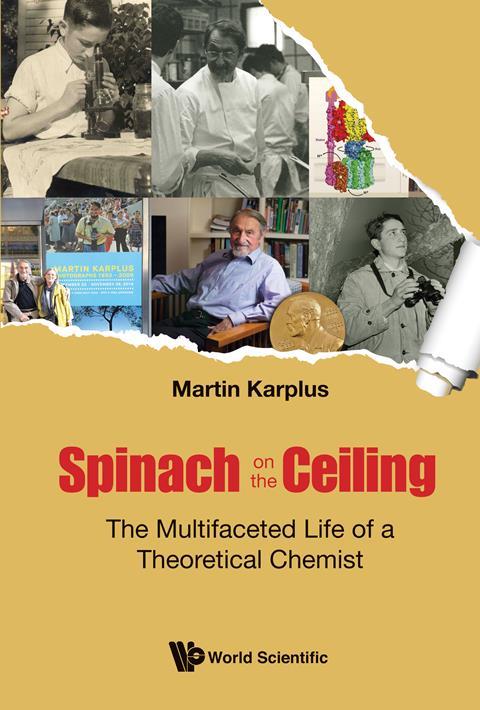
Spinach on The Ceiling: The Multifaceted Life of a Theoretical Chemist - Chemistry World

teke.indah.link

Martin Karplus
World Scientific Europe
2020 | 350pp | £35
ISBN 9781786348067

Buy this book on Amazon.co.uk

An image of the cover of Spinach on the ceiling

Martin Karplus won the Nobel prize in chemistry in 2013 for the development of multiscale models for complex chemical systems. Growing up in the 1930s, he was forced to flee his native Austria as a Jewish refugee in the years leading up to the second world war. This autobiography details the events of his life from pre-war Austria, through his time as a student and his scientific career, all the way up to receiving the Nobel prize and beyond.

The book begins with Karplus’ long family tree, listing over 200 years of his ancestors’ movements and occupations, which gave me a sense of how the Jewish community fared across Europe in those years. During the early chapters of the book, which describe Karplus fleeing from Nazi Austria and growing up in America, it is surprisingly difficult to gauge a real sense of the man’s personality. Instead, the focus tends to be on documenting singular events and achievements, rather than displaying any sense of emotional connection to them. This makes the narrative feel a little impersonal and distant, and the sense of intimacy that I expect from an autobiography is often lacking; there is no account of Karplus meeting his first or second wife, for instance, or the birth of his children.

However, a large chunk of the book is devoted to Karplus’ career. The science is comprehensive and pretty heavy – not the most accessible for people without a good working knowledge in structural biology or computational chemistry. These sections read rather like a lecture and are very well thought out. Virtually every single piece of information is sourced and cited. In my opinion, the scientific sections would work very well as reference or study material.

Throughout the book, there are numerous references to Karplus winning the Nobel prize, and I got the sense that this is an achievement of which he is extraordinarily proud – rightly so. The chapters detailing this feel more fondly written than the majority of the book.

Interspersed between the science and the Nobel prize material, there are several chapters devoted to photography and his sojourns working in kitchens across France and Spain. In these sections, he reveals a little more personality. But this is quickly tempered again, and Karplus resorts to listing various events that seem to hold significance to him though without giving the reader a real personal connection.

For those who have an interest in the deeper scientific aspects of Karplus’ work, this book is definitely worth a perusal. But the lack of emotive insight made me think that I was reading a CV, albeit a very extensive one. While the science discussed is fabulously accomplished and well presented, as an autobiography it left me feeling a little cold.


October 30, 2020 at 03:49PM
https://ift.tt/3jEyhSb

Spinach on The Ceiling: The Multifaceted Life of a Theoretical Chemist - Chemistry World

https://ift.tt/3dlpAsO
spinach

Thursday, October 29, 2020

Balsamic Brown Butter Tortellini with Spinach and Hazelnuts - Yahoo Lifestyle

teke.indah.link

Are you familiar with the magic of store-bought cheese tortellini? It takes almost zero effort to dress up and tastes like you spent all day making it. But instead of pairing the pasta with jarred marinara, try this balsamic brown butter tortellini with spinach and hazelnuts, from Sheela Prakash’s new cookbook, Mediterranean Every Day.

“Cooking something that feels fancy doesn’t necessarily mean toiling for hours in the kitchen,” Prakash writes. “If you don’t believe me, take this recipe as proof. Fresh or frozen cheese tortellini is ubiquitous in grocery stores and more than fine when tossed with marinara sauce for a quick meal. But, in just as little time, it can become a dinner that deserves an impromptu bottle of wine after a harried Wednesday.”

“The secret is a super-easy-to-make brown butter sauce,” she continues, “which makes pretty much anyone weak in the knees. The situation would be well and good if left at that but to make it feel extra special, a surprise ingredient doesn’t hurt. In this case, it’s hazelnuts. They amp up the toasted flavor of the brown butter and add just enough crunch to keep each bite interesting.”

Say no more. We’re all in on this dish.

Reprinted with permission from Mediterranean Every Day: Simple, Inspired Recipes for Feel-Good Food, Copyright © 2020 by Sheela Prakash. Published by The Harvard Common Press, an Imprint of The Quarto Group.

RELATED: Tortellini Soup with Italian Sausage

Servings: 6 servings

Time:

Kosher salt and freshly ground black pepper

6 tablespoons (84g) unsalted butter

½ cup (70g) hazelnuts, chopped

2 tablespoons (20g) finely chopped shallot

4 tablespoons (60mL) balsamic vinegar, divided

Two 9- or 10-ounce (255 or 283g) packages fresh or frozen cheese tortellini, or one 16- to 20-ounce, (454 to 567g) bag fresh or frozen cheese tortellini

5 ounces (about 5 packed cups; 142g) baby spinach

Freshly shaved Parmesan cheese, for serving

1. Bring a large pot of salted water to a boil over high heat.

2. Meanwhile, cut the butter into a few pieces and place it in a large, high-sided skillet over medium heat to melt. Cook, stirring occasionally, until the butter is pale golden, about 3 minutes. Add the hazelnuts and cook, stirring occasionally, until the nuts are glossy and golden and the butter is just beginning to turn toasted brown and have a nutty aroma, about 3 minutes. Add the shallot and sauté until softened, about 1 minute more. Remove from the heat and carefully stir in 3 tablespoons (45mL) of the vinegar, ¼ teaspoon of salt and several grinds of black pepper.

3. Add the tortellini to the boiling water and cook for 1 minute less than the package instructions for al dente.

4. When the tortellini are ready, reserve ¼ cup (60mL) of the pasta water with a measuring cup, then drain the tortellini. Add the reserved pasta water and tortellini to the pan and bring the mixture to a simmer. Add the spinach, handful by handful, tossing and gently stirring until the spinach has wilted and the sauce has thickened enough to coat the pasta evenly, about 2 minutes.

5. Remove from the heat and stir in the remaining 1 tablespoon (15mL) of vinegar. Taste and season with additional salt and pepper, as needed. Serve garnished with shaved Parmesan.

Note: Though there’s hardly anything wrong with butter as-is, allowing it to transform into something so fragrant and nutty that it’s arguably richer than its original state is pure kitchen magic. The technique is fairly easy to master but it does require a close eye, as burned butter isn’t quite as enchanting.

When possible, reach for a light-colored pan so you can easily see the butter browning and know when it’s done. Start with unsalted butter (it can be cold, straight from the fridge), in any amount, but if it’s more than a couple of tablespoons, cut it into equal-size pieces to ensure even melting and browning. Place the butter in the pan and turn the heat to medium. Let the butter melt, stirring occasionally, until it begins to foam. Continue cooking and stirring occasionally. The foam will subside, the color will start to change and lightly browned specks will begin to form at the bottom of the pan. The overall color of the butter will transform from yellow to golden tan to deep toasted brown and the butter will have a nutty, caramelized aroma. Once it reaches this stage, immediately remove it from the heat to prevent it from browning any further and burning.

PureWow may receive a portion of sales from products purchased from this article, which was created independently from PureWow's editorial and sales departments.


October 30, 2020 at 05:00AM
https://ift.tt/2HGQOjD

Balsamic Brown Butter Tortellini with Spinach and Hazelnuts - Yahoo Lifestyle

https://ift.tt/3dlpAsO
spinach

Featured Post

Red River Valley red, yellow potato crop doing OK — so far - Park Rapids Enterprise

teke.indah.link Most red and yellow potatoes, which are sold in the fresh market, are not grown under irrigation in the Red River Valley in...

Postingan Populer