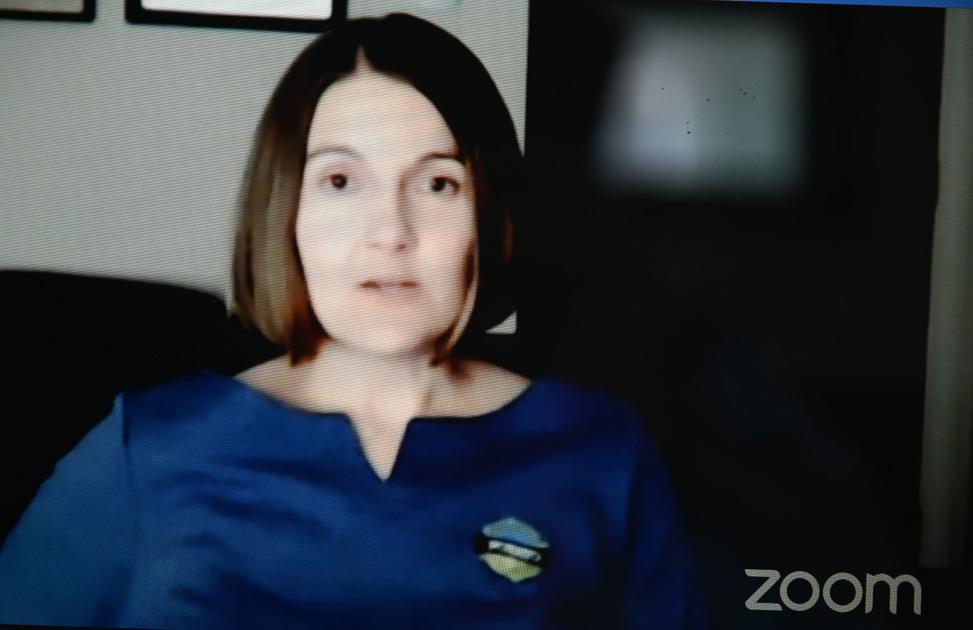
With the nation continuing to reel from the repercussions of the COVID-19 pandemic, the National Potato Council’s annual summer meeting was held using Zoom teleconferencing and Facebook on June 25.
The meeting was originally scheduled to be in Boise, but due to health and travel concerns along with physical distancing measures currently in practice, the meeting was moved to an internet format.
More than 200 people participated in the summer meeting.
NPC President Britt Raybould, of St. Anthony, ID, opened the meeting by putting a positive spin on the teleconference format.
“We’re optimistic that an online platform will open the door to other online events throughout the year and long term will have the benefit of both our regular in-person meetings along with new digital opportunities to reach even more folks in our industry,” Raybould said in her opening statement.
Potato sales have slightly rebounded but the impact to institutional food sales across the nation following quarantine measures taken in the middle of March continues to reverberate, according to Raybould.
“We need to continue pressing USDA and Secretary (Sonny) Perdue to resolve the shortcomings in the specialty crop programs,” she said. “We also need to continue our efforts to inform legislators about the issues we discussed back in February, including improved trade access, support for potato research and immigration reform.”
Kam Quarles, NPC’s CEO, applauded the federal government’s initial efforts to minimize the economic impact of the March quarantine on the nation’s potato industry.
“USDA responded by providing us with the largest surplus commodity purchase in our industry’s history with a $50 million purchase of potatoes under their Section 32 authority,” Quarles said.
However, the USDA’s most recent efforts to provide additional financial assistance to specialty crops, including potatoes, through direct payments to impacted growers has missed the mark, he said.
“As you’re well aware USDA’s first attempt at a direct payment program has not delivered for the specialty crop industry and certainly not for potatoes,” Quarles said during his presentation. “Currently only 2% of funding has gone to specialty crops and it’s proven extremely difficult for potato growers and all fruit and vegetable producers to even qualify to sign up.”
Mike Wenkel, NPC’s chief operating officer, presented an update on NPC’s fundraising efforts for the Potato Leadership Education Advancement Foundation. LEAF was established in January 2020 to promote leadership development activities for the potato industry’s next generation of leaders and provides a $10,000 scholarship for graduate students involved in potato-related research.
“The foundation’s initial goal is to establish a $2 million legacy fund,” Wenkel said. “To date we have pledges and contributions of nearly $1.4 million.”
Mark Klompein, president and CEO of the United Potato Growers of America, followed with an overview of the pandemic’s impact on the fresh potato industry.
Klompein said that the year started out very promising for Idaho growers, with a grower return index of $10.55 per hundred-weight, well above the three-year average. At the start of the pandemic, the Idaho GRI saw a spike to $13, but by the end of March the industry saw a dramatic drop in the GRI due to food service sector almost completely shutting down.
“Idaho is more heavily weighted to food service,” Klompein said. “GRI dropped all the way down into the $6 to $7 range by the early part of May. Since then it has been somewhat stable.”
While volume shipment has recovered to some degree since the first of May to match the three-year average, some of the potatoes entering the fresh market are surplus process potatoes released by the french fry processors, Klompein said.
John Toaspern, chief marketing officer for Potatoes USA, also gave a presentation on the impact of COVID-19 on domestic and international markets.
Toaspern said that prior to the pandemic, utilization of U.S.-grown potatoes was up 3.3% in 2019. This was due to increases in exports, retail sales and food service sales he said.
“Sales of potatoes in the U.S. was increasingly going through the food service channel. This is extremely important for us to remember as we look at what happened,” Toaspern said. “Starting in March we see the closure of restaurants across the country.
“This has a huge impact on our major channel of sales for potatoes. Sales at food service dropped significantly, down almost 50 percent in March, April and May across the country.”
While food service sales dropped, retail sales rose as everyone started cooking at home resulting in empty shelves, he said.
“We could have sold even more potatoes if we had the ability to meet the demand but the supply chain had to get changed to do that and to move from the food service product to the retail product,” Toaspern said.
“Internationally the same phenomenon occurred,” Toaspern said. “We saw food service shutdown across Asia, Latin America, even before it occurred in the U.S. This led to a back-up of ingredients that were coming from the U.S. and other places. US fries being one of the most impacted by the shutdown of food service.”
Toaspern said that potato exports for the fiscal year were still up until April when the COVID-19 impact becomes discernible.
“This is when we see exports decline significantly, down 29% for frozen, 31% for fresh, not quite as big of a decline for dehy,” Toaspern said. “Fortunately things have reopened in Asia.”
Toaspern anticipates that exports will still be down for May and June.
“But hopefully by July that backlog of product has been utilized and we start to see things returning to normal in the international marketplace,” he said. “We also hope that this occurs domestically and we are already seeing this recovery. We certainly are seeing the supply chains have adjusted, so I think that going forward we will be in a better position and we will see sales return to what they were.”
Quarles said that while recent economic indicators look promising, he’s concerned that should there be a second wave of COVID-19 NPC is working to make sure that there is sufficient relief available for growers to get through these difficult times.
“We want to be in the mode of having a strong reliable safety net there for growers,” Quarles said. “If the recovery happens and it’s in a sustained way and our typical market functions are able to operate that’s terrific. If we go back to some type of shut down situation and growers need the relief, we want it to be there for them. That’s the way we’re operating going forward here.”
July 02, 2020 at 01:56AM
https://ift.tt/2Bs48Wc
National Potato Council hosts summer meeting by teleconference - Post Register
https://ift.tt/2rh4zOj
Potato


No comments:
Post a Comment